
According to the latest report from TrendForce, memory prices for the first quarter of 2026 are skyrocketing at record-breaking speeds. Driven by a massive supply-demand imbalance and the relentless growth of AI and data centers, suppliers are flexing their pricing power, leaving consumers and manufacturers in a tight spot. This is the steepest quarterly surge on record, and even the biggest PC manufacturers are struggling to secure enough inventory as tier-1 suppliers report rapidly declining stock.
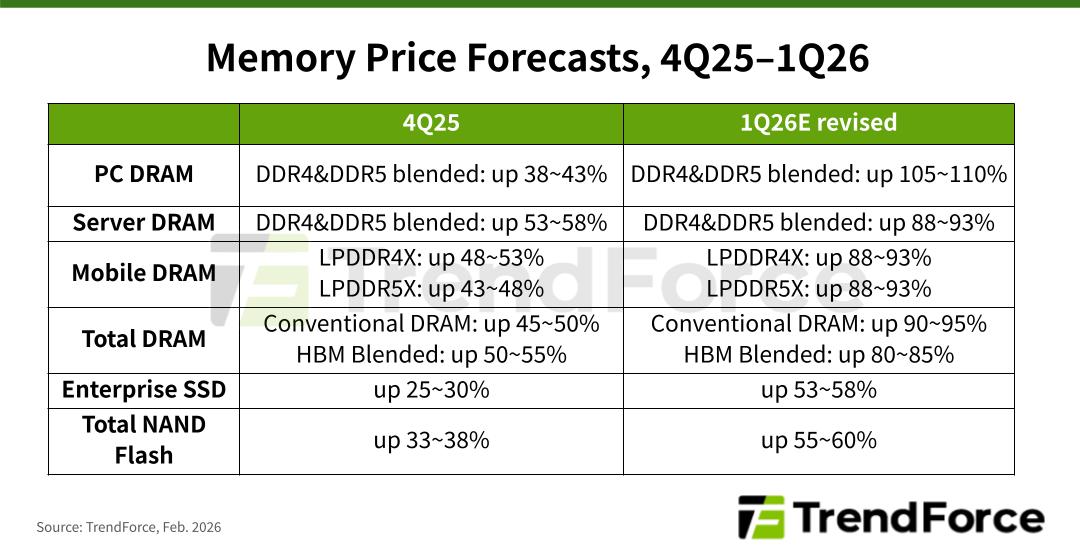
Conventional DRAM contract prices have been revised upward significantly, with projected increases of 90% to 95% quarter-over-quarter. Even worse, PC DRAM prices are expected to at least double in Q1 2026. Mobile users aren’t safe from the hike either. The supply-demand gap is forcing different tech segments to fight over limited allocations, driving up the costs of LPDDR4X and LPDDR5X. These mobile memory modules are expected to see a 90% price jump this quarter.
Over on the storage side, NAND Flash memory is now expected to rise between 55% and 60%, a sharp jump from previous estimates. This is partly because memory manufacturers are pivoting their production lines toward the more profitable DRAM, further limiting the supply of SSDs. Enterprise SSDs, in particular, are seeing a price hike of up to 58% as North American cloud service providers scramble to stockpile inventory for AI inference applications.
For us here in the Philippines, this means we should expect a ripple effect on local retail prices very soon. If you see a good deal on components or gadgets right now, you might want to pull the trigger before these price adjustments reflect at the stores.
FAQ – Frequently Asked Questions
Why are DRAM and SSD prices skyrocketing?
A massive supply shortage driven by the AI boom. Manufacturers are prioritizing expensive data center hardware, leaving consumer tech (PCs and phones) with very little stock.
How much will DRAM prices increase?
Expect a historic surge of 90% to 95%. For PC builders, DRAM prices are projected to at least double this quarter—the steepest quarterly hike on record.
Are SSDs getting more expensive too?
Yes. NAND Flash prices are expected to jump by 55% to 60%. Manufacturers are shifting production toward DRAM, making SSDs much harder and more expensive to source.
Will smartphones be affected?
Definitely. Mobile memory (LPDDR) is seeing a 90% price hike. Unless brands locked in old rates, expect these costs to be passed on to consumers in upcoming phone releases.
When will these hikes hit the Philippines?
Global contract prices usually reflect at local retail within a few weeks. If you see a good deal on a laptop or RAM today, grab it now before the new, higher-priced stock arrives.
Source: Gadget Pilipinas


0 Comments